This is default featured slide 1 title

Go to Blogger edit html and find these sentences.Now replace these sentences with your own descriptions.

This is default featured slide 2 title

Go to Blogger edit html and find these sentences.Now replace these sentences with your own descriptions.

This is default featured slide 3 title

Go to Blogger edit html and find these sentences.Now replace these sentences with your own descriptions.

This is default featured slide 4 title

Go to Blogger edit html and find these sentences.Now replace these sentences with your own descriptions.

This is default featured slide 5 title

Go to Blogger edit html and find these sentences.Now replace these sentences with your own descriptions.

Tuesday, December 22, 2015

(11-20)PICTURE AND NAME APPAREL TRADITIONS OF THE 33 PROVINCES IN INDONESIA

PICTURE AND NAME APPAREL TRADITIONS OF THE 33 PROVINCES IN INDONESIA


11. Jakarta - Clothing Traditional Betawi
Jakarta traditional clothes traditional clothing commonly called by the name of the affected indigenous Betawi people of various shades of Jakarta are very diverse among others influenced by the culture of Arabic, Chinese, Malay and Western Culture.


12. West Java Province 
- Clothing Traditional Kebaya
For custom clothing traditional West Java has the distinction of male and female. Kain kebaya basically used women at all levels, both the people and the nobility biasan. The difference may be only on the materials used and the style kebaya hiasnya.


13. Banten - Clothing Traditional Pangsi
To Bedouins still wear their traditional customs in everyday life. Inner Baduy often wearing traditional white clothing that symbolizes purity. Outer Baduy while wearing traditional clothes black.


14. Central Java - Apparel Fabrics Traditional Kebaya
costume identical to the traditional Central Javanese kebaya use batik cloth, which is used batik batik is still quite original.


15. Special Province of Yogyakarta 
- Clothing Traditional Kasatrian
Indigenous peoples' traditional clothing Yogyakarta Special Region consists of a set of traditional indigenous clothing that has elements that can not be separated from one another. Completeness of dress is a special feature for the user's identity provider that includes the function and role.Therefore, how to dress is usually standardized by custom, when worn, in the man charged, and who is wearing it.


16. East Java - Traditional Pesa'an Apparel
Apparel traditional customs Madura, East Java, commonly called pesa'an. These clothes seem simple because only a red and white striped shirt and baggy pants. For the ordinary woman using kebaya.


17. Province of Bali 
- Bali Traditional Clothing
Apparel Balinese real customs vary widely, although briefly looks the same. Each region has a characteristic in Bali symbolic and ornaments, based on activities / ceremonies, gender and age of users. Social and economic status of a person can be determined based on the style of clothing and jewelry ornaments worn.


18. West Nusa Tenggara 
- Lombok Traditional Clothing
Apparel traditional indigenous West Nusa Tenggara Province is the Indigenous Clothing Lombok.


19. East Nusa Tenggara 
- Clothing Traditional East Nusa Tenggara
Ti'langga the accessories of traditional custom clothing for men Rote, East Nusa Tenggara. For a woman, usually wearing a short kebaya and woven fabric bagain wearing underneath.


20. West Kalimantan Province 
- Traditional Clothing War
This clothing is clothing that has been used since the first community of West Kalimantan. West Kalimantan trasional custom clothing made from bark that is processed into cloth. For the main materials used as ingredients in traditional clothing traditional West Kalimantan is bark kapuo or ampuro. The bark is beaten, including at o'clock in the water using a paddle that is round. The ability to process the bark into cloth by the community is the ability for generations passed down by ancestors.




Button Next iconButton Download iconActions arrow right double icon

(1-10) PICTURE AND NAME APPAREL TRADITIONS OF THE 33 PROVINCES IN INDONESIA

PICTURE AND NAME APPAREL TRADITIONS OF THE 33 PROVINCES IN INDONESIA


Picture And Name Apparel Traditions Of the 33 provinces in Indonesia - Perhaps young people today are already scarce interested to culture this beloved country Indonesia. Because most of them are too busy with affairs such as dating, salon, shopping, movies or anything else. But if not we as a young child, who else is going to preserve the culture of Indonesia at least know their culture. Here is a picture and the name of the traditional house of 33 provinces in Indonesia.


1. Aceh province - Clothing Traditional Ulee Balang
Ordinary Acehnese traditional custom clothing is Ulee Balang, the clothes are usually used by the king and his family.


2. North Sumatra province - Clothing Traditional Ulos
Traditional custom clothing North Sumatra is Ulos. Custom clothing Ulos considered by society as ajimat Karo Batak tribe that has a certain magical power.


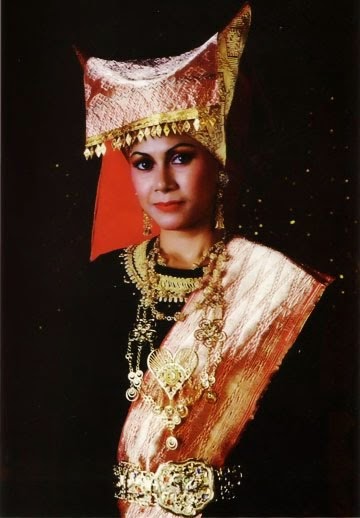
3. West Sumatra province 
- Clothing Traditional Bundo Kanduang
Traditional clothes traditional West Sumatran divided into two, namely clothing and clothing Indigenous prince Bundo Kanduang contained in the Minangkabau region of West Sumatra.

(Clothing Traditional prince)

(Clothing Traditional Bundo Kanduang)


4. Riau Province 
- Clothing Traditional Malay
Lists are traditional clothes traditional clothing traditional Malay custom. In Riau, there are three kinds of traditional Malay custom clothing namely Siak Riau, Riau Indragiri and Bengkalis.

 (Clothing Traditional Siak Riau, Riau Indragiri and Bengkalis)

5. Riau Islands Province 
- Clothing Traditional Belanga
For traditional custom men's apparel, clothes worn the shirts Malay form of a boss who called the bay cauldron. The clothing consists of trousers, fabric sampin, and skull cap or head covering. For women, the clothing worn in the form of brackets clothes, fabrics and scarves. Shawl worn by way draped over his shoulder.


6. Jambi 
- Jambi Malay Traditional Clothes
Traditional custom clothing Jambi same as those in other areas of Sumatra island, the traditional Malay custom clothing. Traditional Malay traditional clothes of Jambi is usually more luxurious than the clothes are used in everyday life because embroidered with gold thread and decorated with luxurious decorations for completeness.


7. South Sumatra Province 
- Clothing Traditional Aesan Gede
Traditional clothes traditional South Sumatra is Aesan Gede. Traditional costume is inspired by the era that was once glorious kingdom of Sriwijaya in South Sumatra.


8. Bangka Belitung 
- Clothing Traditional Paksian
Traditional custom clothing Bangka Belitung is Paksian. For women usually wear red braces are made of silk and a head wearing a crown which is called by the name of Paksian. As for the men using a turban or commonly known as the Pacific Islands community Sungkon.


9. Bengkulu Province 
- Clothing Traditional Bengkulu
Traditional custom clothing Bengkulu women wearing long-sleeved brackets, studded motifs, gold embroidery shaped plates are round like a coin. Traditional men's custom clothing consists of a jacket, gloves, long pants, footwear fitted with headgear and a kris.

10. Lampung - Clothing Traditional Bone Onions
Traditional clothes traditional Lampung when examined there is a difference between lampung coast with lampung mainland but the base is still the same which uses filter fabric decorated with brass which take into beautiful and mebuat luxury, while the filter fabric is a fabric woven manually using ink mas carved by the hands of skilled hands to make the bride who wear the clothes look more authoritative.


Button Next iconButton Download iconButton Previous icon

Sunday, December 20, 2015

TYPES OF LAND IN INDONESIAN


TYPES OF LAND IN INDONESIA


1. Volcanic Soil

a. Land Andosol

  • The process of formation: from volcanic ash which has experienced weathering process
  • Characteristics: gray to yellow, sensitive to erosion, and very fertile
  • Utilization: as agricultural land, plantations, forests of pine or fir
  • Distribution: Sumatra, Java, Bali, Lombok, Halmahera, West Nusa Tenggara and Sulawesi
andosol
andosol

b. Land Regosol

  • The process of formation: from a new volcanic ash deposition has coarse grains
  • Characteristics: coarse grained, gray to yellow and low organic matter content
  • Utilization: for farming rice, sugarcane and coconut
  • Distribution: on the slopes of volcanoes, beaches and coastal dunes which includes the islands of Sumatra, Java, Nusa Tenggara

c. Alluvial soil (soil Deposition)

  • The process of formation: the land of erosion (silt and fine sand) in low-lying areas
  • Characteristics: gray and sensitive to erosion
  • Utilization: as agricultural land and crops rice
  • Distribution: Sumatra, Java northern Halmahera, West Kalimantan, South Kalimantan, Sulawesi and Papua, the southern

2. Land Organosol

a. Humus soil

  • The process of formation: from the decomposition of organic materials
  • Characteristics: blackish color, easily wet, organic matter, very fertile
  • Utilization: as agricultural land
  • Distribution: Lampung, South-Central Java, South Kalimantan and Sulawesi Tenggara
Organosol
Organosol

b. Peat

  • The process of formation: from the decomposition of plant / organic material in an area that is always waterlogged (swamps)
  • Characteristics: is highly acidic, low nutrient so infertile
  • Utilization: for agriculture tides
  • Distribution: The east coast of Sumatra, Kalimantan, Sulawesi, Halmahera, Seram, Papua, South Coast
Peat
Peat

3. Land Litosol (rocky ground)

  • The process of formation: from the weathering of igneous and sedimentary young (not perfect) so that large grains / rough
  • Characteristics: diverse soil texture and generally sandy, not textured, color content of rocks, gravel and fertility varies
  • Utilization: still reed can be used for forest
  • Distribution: Central Java, East Java, Madura, East Nusa Tenggara, Maluku, Sulawesi and Sumatra

4. Land Podzol

  • The process of formation: in an area with low temperatures and high rainfall
  • Characteristics: pale color, high content of quartz sand, very sour, sensitive to erosion, less fertile
  • Utilization: for agricultural crops
  • Distribution: Central Kalimantan, North Sumatra, Papua
Podsol
Podsol

5. laterit

  • The process of formation: Soils leached rainwater, so that nutrients have been lost seep and flow into the ground
  • Characteristics: reddish brown color, infertile
  • Utilization: for agricultural land
  • Distribution: West Kalimantan, Lampung, Banten, Southeast Sulawesi

6. Land Mergel

  • The process of formation: from the dissolution mixture of lime, sand and clay due to rain events
  • Characteristics: infertile
  • Utilization: for rain teak
  • Distribution: Yogyakarta, South Priangan in West Java, mountains Kendeng in Central Java, Kediri, Madiun, East Nusa Tenggara

7. Land Terarosa (Kapur)

a. Land Renzina

  • The process of formation: from weathering limestone in areas with high rainfall
  • Characteristics: white to black, nutrient-poor
  • Utilization: for crops, forest teak
  • Distribution: Gunung Kidul, Yogyakarta
Terarosa
Terarosa

b. Mediterranean soil

  • The process of formation: the result of hard limestone rock weathering and sediment
  • Characteristics: White color brown, hard, infertile
  • Utilization: agricultural fields, forests of teak
  • Distribution: Mountains of East Java, Nusa Tenggara, Central Java, Sulawesi, Maluku, Sumatra

The characteristics of the soil in Indonesia:

  • Contains a lot of nutrients
  • Good soil structure, meaning that the composition of soil grains are not too dense and not too lenggang
  • Useful contain enough water to dissolve nutrients
  • Having salts in large quantities

Efforts to conserve soil resources:

  • Fertilization cultivated with green manure / manure / compost
  • Forests are made up on the slopes of the mountain
  • Creating terassering / swale in sloping areas
  • Afforestation and reforestation of denuded areas, and so on.
Reforestation
Reforestation


source